
PAGE_HEADER
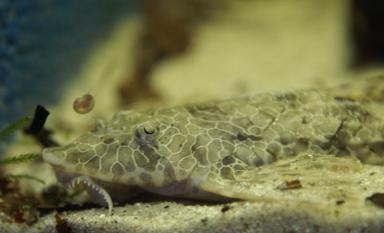
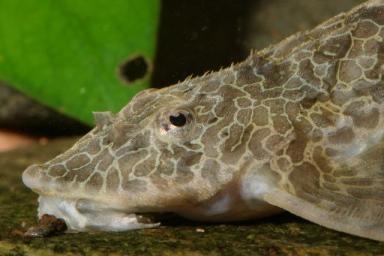 Male - close-up of head
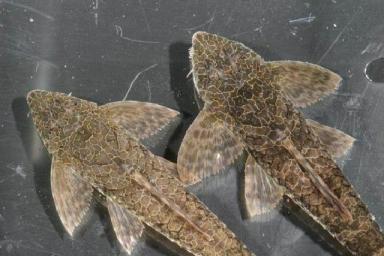 Pair
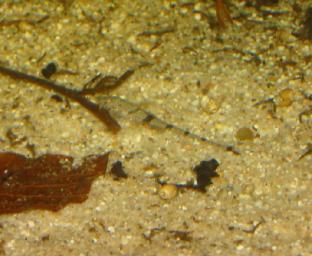 Six week old juvenile
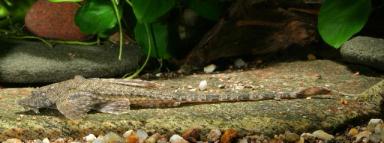 Female
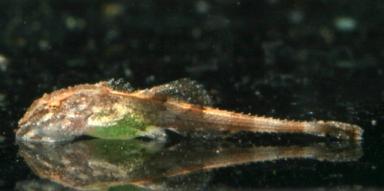 Fry
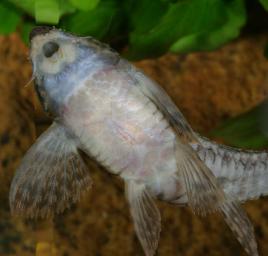 Close-up of ventral view
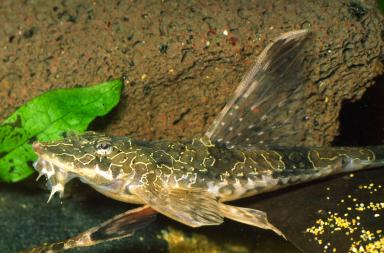
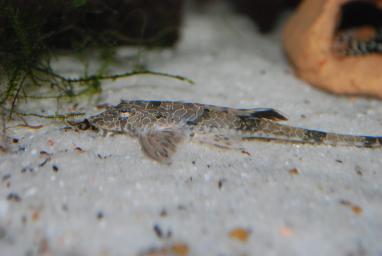
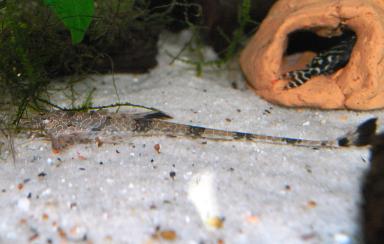
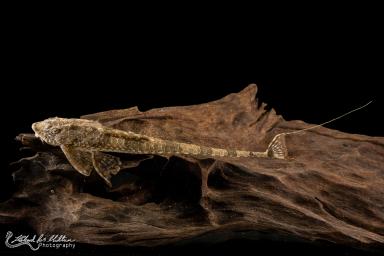
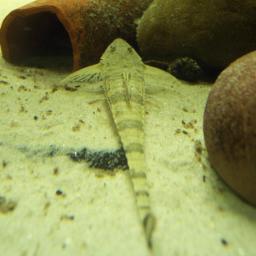 Dorsal view
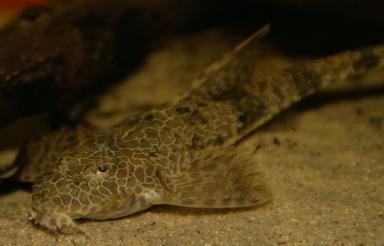
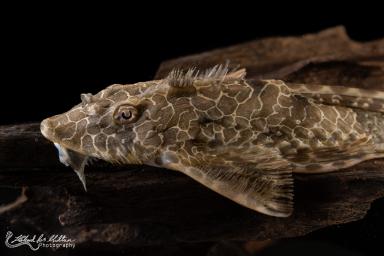 Close-up of head
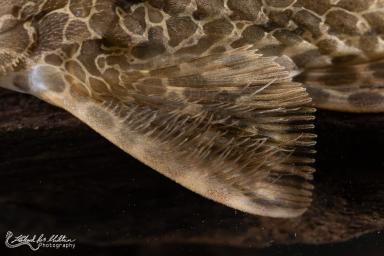 Close-up of pectoral fin
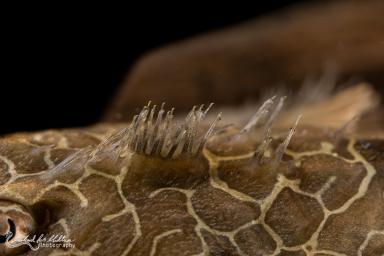 Close-up of dorsal odontodes
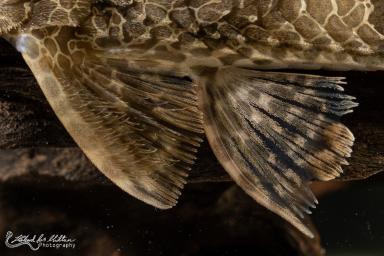 Close-up of pectoral and ventral fins
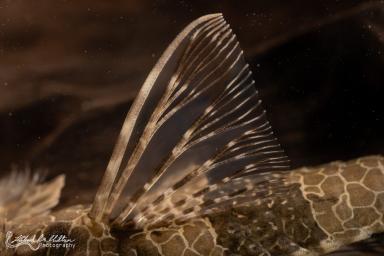 Close-up of dorsal fin
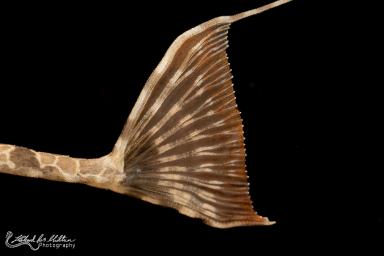 Close-up of caudal fin
| ⇓ Zebra Pleco (Hypancistrus zebra) Data Sheet | |
|---|---|
| Scientific Name | Rineloricaria teffeana (Steindachner, 1879) |
| Common Name | |
| Type Locality | Amazon River near Teffé, Brazil. |
| Synonym(s) | Hemiloricaria teffeana, Loricaria teffeana, Loricaria valenciennesii |
| Pronunciation | rhine lor ee kar ee ah. - TEF ee anna |
| Etymology | Greek, rhinos = nose + Latin, lorica, loricare = cuirass of corslet of leather. Named after Tefé, it's type locality. |
| ⇓ Species Information | |
| Size | 140mm or 5.5" SL. Find near, nearer or same sized spp. |
| Identification | Often fish sold under this name are the black form of Loricaria simillima. Loriciaria even as young fish have feathered barblels and longer points on the pelvic fins. This misidentification is not due to the two fish looking similar but rather the perpetuation of the wrong identification in various sources. In Germany mostly misidentified as Hemiloricaria fallax! |
| Sexing | Males grow short spines in the top of their heads and pectoral fins. These odontodes (spines) on the head standi in 2 rows and only appear during the breeding season (December until May / June). Outside this time, you have to look a little closer. Males have wider heads and pectorals fin rays; the posterior margin of pectoral more concave; Female with narrower head. |
| ⇓ Habitat Information | |
| Distribution | South America: Amazon River basin. Amazon, Middle Amazon (Solimoes), Madeira (click on these areas to find other species found there) Amazon, Tefé (click on these areas to find other species found there) Login to view the map. |
| IUCN Red List Category | Least Concern , a distribution map is available on the IUCN species page. Last assessed 2018. |
| pH | 4.0 - 6.5 |
| Temperature | 26.0-30.0°C or 78.8-86°F (Show species within this range) |
| Other Parameters | Typical tropical blackwater is recommended. |
| ⇓ Husbandry Information | |
| Feeding | Adaptable omnivores, these fish will eat most foods from cucumber or zucchini slices to frozen bloodworm or dry flake foods. User data. |
| Furniture | The fish should be provided with half-pipe type refuges which also often be used as spawning sites. Fine sand, tubes, diameter 3 - 4 cm, bamboo preferred. |
| Compatibility | Peaceful and not territorial. |
| Breeding | Optimal temperature 27° C and pH 6.0-6.5. If water is warmer or more acidic, almost all eggs die during 48 hours. Only one male per tank spawns with sometimes two or three females at the one time. He tends and hatches the green eggs (circa 100 per female) for six days. After hatching, yolk sac needs two days to be used up, then feed with artemia or cyclops. The fry grow fast - four centimetres in six weeks is no problem. |
| Breeding Reports | There is no breeding report. |
| ⇓ Further Information | |
| Literature & References | Original Description: <b> Steindachner, F.</b> 1879 <a href="https://www.biodiversitylibrary.org/page/28088018" target=_blank>See ref. at BHL</a> |
| Wishlists | There is no wish to keep this species. |
| Spotters | There is no record of this fish being seen. |
| ⇓ More Resources | |
| Forum BBCode | |
| Find CLOG | 6 mentions on the forum, starting 14th Nov 08 |
 | Look up R. teffeana on PlanetCatfish.com |
 | Look up R. teffeana on Fishbase |
 | Look up R. teffeana on Encyclopedia of Life |
 | Look up R. teffeana on Global Biodiversity Information Facility |
 | LFS label creator ARN ref:1.4.43.1294 |
| Last Update | Wed Jan 01, 2025 8:02 pm (Species record created: Mon Jun 28, 2004 7:00 am) |
