
PAGE_HEADER
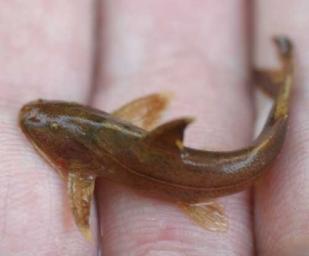
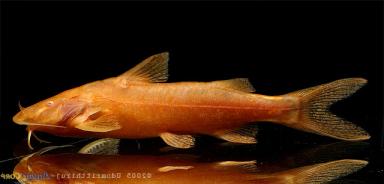 Albino
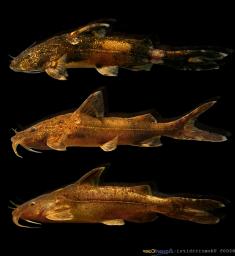 Trio of specimens from the type locality, Chantaburi, SE Thailand
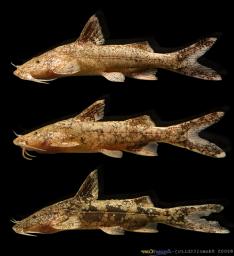 Trio of specimens from Thai peninsular
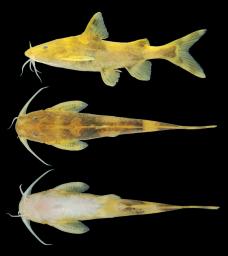

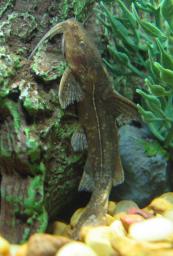
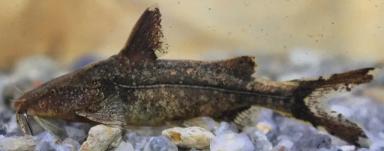 Bumang River, Bangka, Indonesia
| ⇓ Zebra Pleco (Hypancistrus zebra) Data Sheet | |
|---|---|
| Scientific Name | Glyptothorax fuscus Fowler, 1934 |
| Common Name | |
| Type Locality | Chantaburi, southeastern Thailand. |
| Synonym(s) | Glyptothorax callopterus |
| Pronunciation | Gleep toe thor axe - foo skuss |
| Etymology | The generic name comes from the Greek glyptos, meaning carved, and thorax, meaning breastplate (or the part of the body covered by it), in reference to the folds of skin comprising the thoracic adhesive apparatus. From the Latin fuscus, meaning brown, in reference to the colour. There are 5 other speciesAncharius fuscus Clarias fuscus Heteropneustes fuscus Nanobagrus fuscus Pseudobagarius fuscus with this name. |
| ⇓ Species Information | |
| Size | 121mm or 4.8" SL. Find near, nearer or same sized spp. |
| Identification | Sisorid catfishes of the genus Glyptothorax Blyth are benthic inhabitants of torrential waters of rivers and streams in montane and submontane parts of tropical Asia. The members of the genus are adapted to attach themselves to rocks and boulders against strong currents by means of a thoracic adhesive apparatus comprising grooves and folded pleats of skin parallel or oblique to the longitudinal axis of the body. The genus has a wide distribution, ranging from Turkey and Syria in the west, to India and China in the east, and extending further southeastward to Indonesia. With 84 nominal species, Glyptothorax are the most speciose genus of catfishes in Asia (Eschmeyer et al., 1998, Ng, 2005); 67 species were treated as valid by Thomson & Page (2006). A stout-bodied species with a relatively slender caudal peduncle and a fairly uniformly-coloured, rusty brown body with a few scattered darker spots. A distinct, thin pale midlateral band is often present. |
| Sexing | Males have a longer genital papilla. |
| General Remarks | This is the common lowland species found throughout the Malay Peninsula, and is probably the only species of Glyptothorax inhabiting small, forested streams. |
| ⇓ Habitat Information | |
| Distribution | Asia: Chao Phraya and Mekong basins. Thailand Waters, Chao Praya (click on these areas to find other species found there) Mekong (click on these areas to find other species found there) Pacific, Malaysia Waters, Peninsular Malaysia Waters (click on these areas to find other species found there) Login to view the map. |
| IUCN Red List Category | Least Concern , a distribution map is available on the IUCN species page. Last assessed 2019. |
| pH | 6.0 - 7.2 |
| Temperature | 21.0-26.0°C or 69.8-78.8°F (Show species within this range) |
| Other Parameters | Strong current preferred. Good oxygenation necessary. |
| ⇓ Husbandry Information | |
| Feeding | Will feed on live/frozen food, but does not appear to take prepared foods. User data. |
| Furniture | A bottom of coarse sand/fine gravel and enough hiding spaces to partially deflect the current and for the fish to hide in. This can either be in the form of driftwood and/or leaf litter. |
| Compatibility | A peaceful species suitable for a fast water tank. Best kept in a well-oxygenated tank with strong current. |
| Breeding | Unreported in the aquarium. |
| Breeding Reports | There is no breeding report. |
| ⇓ Further Information | |
| Reference | Proceedings of the Academy of Natural Sciences of Philadelphia v. 86, pp 89, Figs. 31-33. |
| Wishlists | There is no wish to keep this species. |
| Spotters | There is no record of this fish being seen. |
| ⇓ More Resources | |
| Forum BBCode | |
| Find CLOG | 7 mentions on the forum, starting 1st Jun 09 |
 | Look up G. fuscus on PlanetCatfish.com |
 | Look up G. fuscus on Fishbase |
 | Look up G. fuscus on Encyclopedia of Life |
 | Look up G. fuscus on Global Biodiversity Information Facility |
 | LFS label creator ARN ref:1.20.170.1241 |
| Last Update | Sun Nov 30, 2025 1:19 am (Species record created: Sat Mar 27, 2004 8:00 am) |
