
PAGE_HEADER
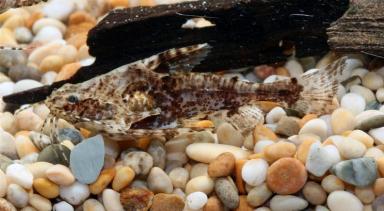
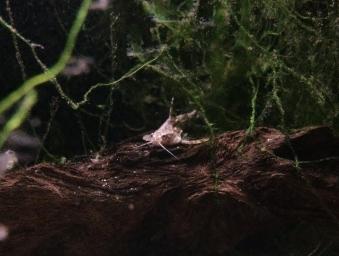
 Video
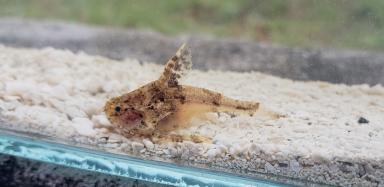 From a stream of the Rio Nanay, Iquitos, Peru
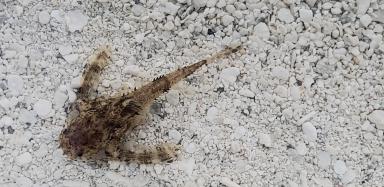 From a stream of the Rio Nanay, Iquitos, Peru
| ⇓ Zebra Pleco (Hypancistrus zebra) Data Sheet | |
|---|---|
| Scientific Name | Physopyxis lyra Cope, 1872 |
| Common Name | Robocop Catfish (Peru) |
| Type Locality | Río Ampiyacu, Peru. |
| Synonym(s) | |
| Etymology | There is 1 other speciesSturisoma lyra with this name. |
| ⇓ Species Information | |
| Size | 35mm or 1.4" SL. Find near, nearer or same sized spp. |
| Identification | Physopyxis can be distinguished from the other Doradidae by the miniature size (adults generally less than 31 mm SL) and a unique combination of additional features: extreme development of the exposed pectoral girdle; well developed coracoid process longer than the postcleithral process; anterior plate of the nuchal shield absent; dorsal spine serrated only along the basal portion of its anterior margin; two infraorbital bones in young that become fused into a single plate in adult specimens; pectoral spine reaching to base of anal fin. Physopyxis lyra differs from the other species of the genus by possessing a single row of spines on the lateral plates and a strong scapular girdle with long, broad coracoid processes having distal tips enlarged and divergent. |
| ⇓ Habitat Information | |
| Distribution | South America: Amazon and Essequibo River basins. Amazon (click on these areas to find other species found there) Amazon, Upper Amazon, Ampiyacu (click on these areas to find other species found there) Guyana Waters, Coastal Rivers of Guyanas, Essequibo (click on these areas to find other species found there) Amazon, Upper Amazon, Nanay (click on these areas to find other species found there) Login to view the map. |
| IUCN Red List Category | Least Concern , a distribution map is available on the IUCN species page. Last assessed 2020. |
| Temperature | 23.0-26.0°C or 73.4-78.8°F (Show species within this range) |
| ⇓ Husbandry Information | |
| Feeding | A nocturnal scavenger. The best way to ensure this fish is properly fed is to introduce sinking food into the tank after dark. Most foods would be accepted gluttonously. Individuals will gorge themselves on food to the point of appearing fit to burst. User data. |
| Furniture | Usually found in places with accumulated organic debris, like dense meshes of roots of floating aquatic plants. Specimens also can be found among submersed leaf litter and among root mats of river bank plants. Aquarium observations indicate that P. lyra is predominantly nocturnal, and spends most of day time sheltered among submersed root mats or buried in sand. |
| Compatibility | Peaceful and small, would be perfect with anything that wouldn't consider it food. |
| Suggested Tankmates | Due to its diminutive size tank mates should be relatively small, Apistogramma species are found in the same habitat. |
| Breeding | No member of this genus has been bred in the aquarium. |
| Breeding Reports | There is no breeding report. |
| ⇓ Further Information | |
| Reference | Proceedings of the Academy of Natural Sciences of Philadelphia v. 23, pp 273, Pl. 5 (figs. 1a-1c). |
| Wishlists | There is no wish to keep this species. |
| Spotters | There is no record of this fish being seen. |
| ⇓ More Resources | |
| Forum BBCode | |
| Find CLOG | 13 mentions on the forum, starting 14th Jan 05 |
 | Look up P. lyra on PlanetCatfish.com |
 | Look up P. lyra on Fishbase |
 | Look up P. lyra on Encyclopedia of Life |
 | Look up P. lyra on Global Biodiversity Information Facility |
 | LFS label creator ARN ref:1.12.274.1094 |
| Last Update | Thu Jan 02, 2025 9:40 am (Species record created: Tue Aug 01, 2006 3:50 pm) |
