
PAGE_HEADER
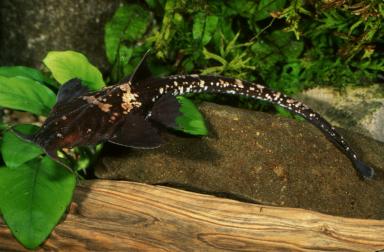
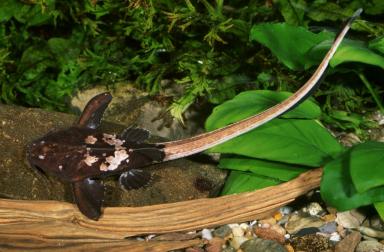
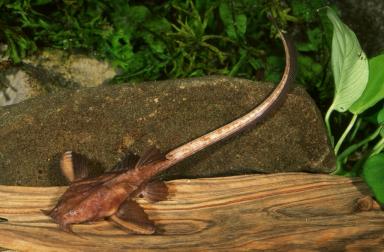
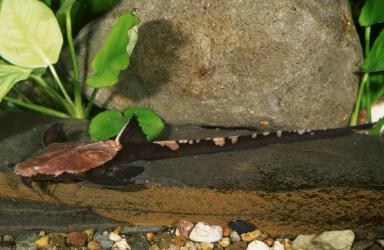
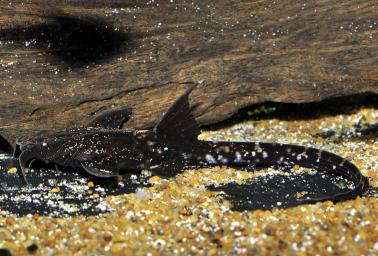
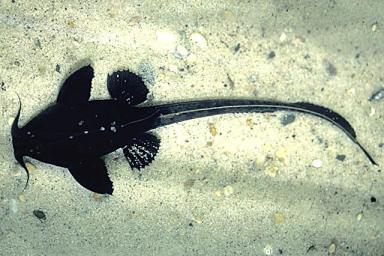 Dorsal view
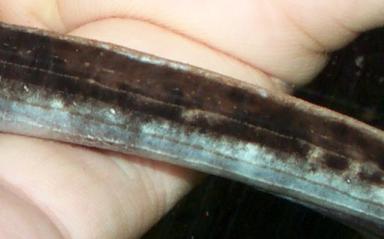 Close-up of rows of tubercles on tail
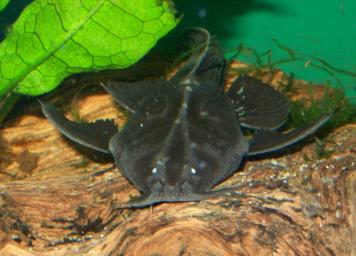 Head-on view
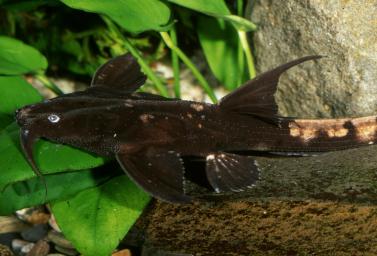 Male
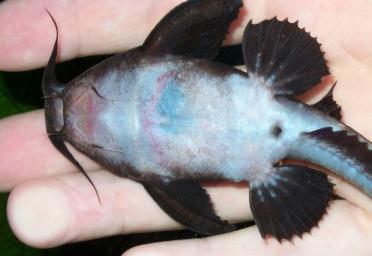 Close-up of ventral view
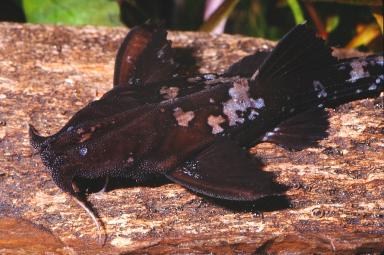 Close-up of head
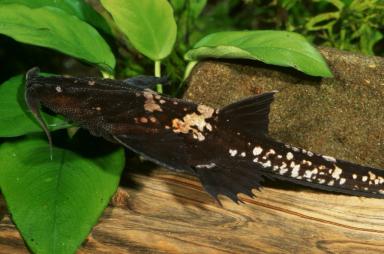 Female
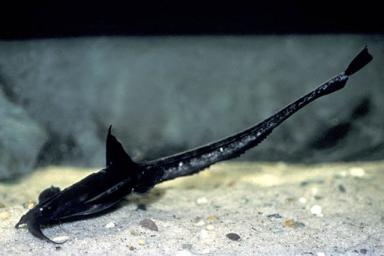 Male
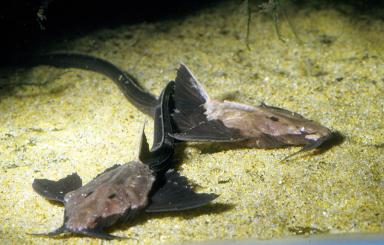
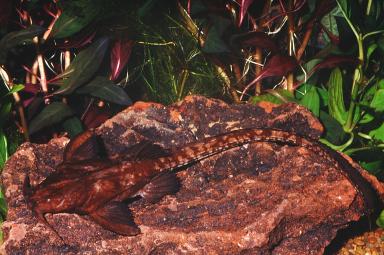
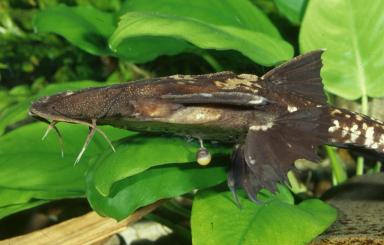 Female carrying egg
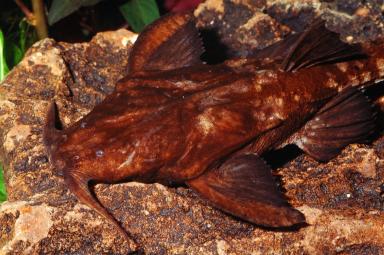 Close-up of head
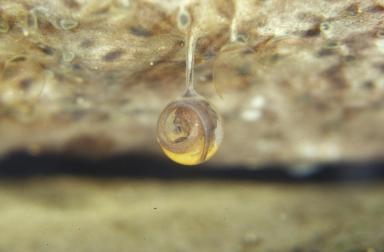 Super close-up of embryo
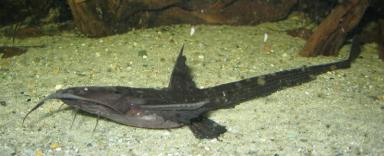
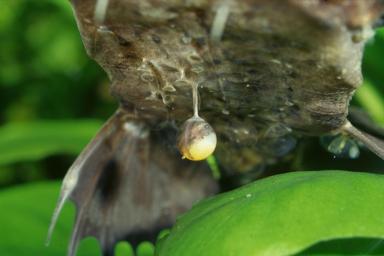 Close-up of female and egg
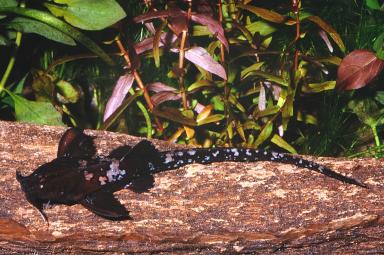
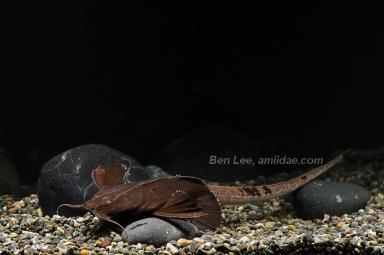
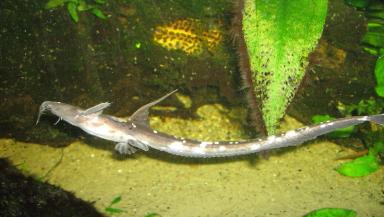
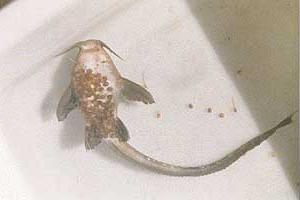 Eggs attached to underside of parent
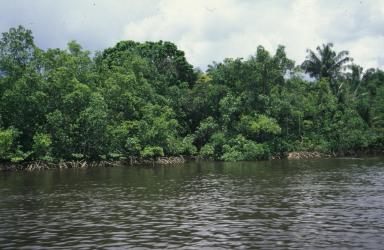 Habitat: Essequibo river, Guyana
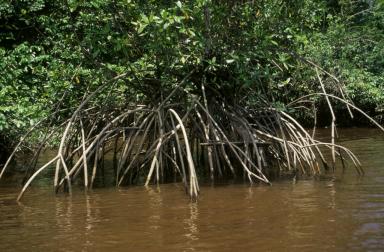 Habitat
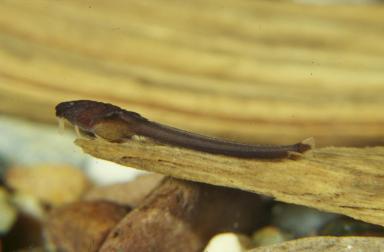 Newly hatched fry
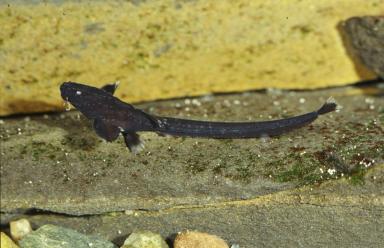 Ten day old fry
| ⇓ Zebra Pleco (Hypancistrus zebra) Data Sheet | |
|---|---|
| Scientific Name | Platystacus cotylephorus Bloch, 1794 |
| Common Names | Eel-tail Banjo Catfish Banded Banjo, Båndet Banjomalle (Danish, Denmark), Maulbruetender Hexenwels (German, Germany), Mottled Eel-tail Banjo Catfish, Whiptail Banjo Catfish |
| Type Locality | No locality. |
| Synonym(s) | Aspredo cotylephorus, Aspredo sexcirrhis, Aspredo spectrum, Cotylephorus blochii, Platystacus nematophorus, Silurus hexadactylus |
| Pronunciation | plat ee STAK uss - coat ee LEFF or uss |
| Etymology | Platystacus: From the Greek platys, meaning broad or flat and the Latin acus, meaning needle; in reference to the shape. Cotylephorus: meaning sites for the attachment of developing embryos, which in this case refers to the ventral area. |
| ⇓ Species Information | |
| Size | 318mm or 12.5" SL. Find near, nearer or same sized spp. |
| Identification | The fishes mottled colouration is very variable - almost to the point of no two individuals looking exactly the same. |
| Sexing | Females appear more brown than black with very little or no mottling. Males by contrast are darker and show high contrast mottling. Mature males have larger pectoral fins than equally aged females. |
| General Remarks | This species is able to produce bark-like sounds by quickly moving the pectorals. These sounds are probably used to locate each other during mating periods and certainly when being attacked. |
| ⇓ Habitat Information | |
| Distribution | Central and South America: Venezuela to northern Brazil (including the lower portions of coastal rivers). Amapa State Waters (click on these areas to find other species found there) Guyana Waters, Coastal Rivers of Guyanas (click on these areas to find other species found there) Pará State Waters (click on these areas to find other species found there) Venezuela Caribbean Waters (click on these areas to find other species found there) Amazon, Lower Amazon, Xingu Imported (click on these areas to find other species found there) Login to view the map. |
| IUCN Red List Category | Least Concern , a distribution map is available on the IUCN species page. Last assessed 2020. |
| pH | 6.0 - 8.2 |
| Temperature | 22.0-25.0°C or 71.6-77°F (Show species within this range) |
| Other Parameters | Although the fish tolerates lower, the fish should really be kept at as near to a neutral pH as possible. Water should be medium hard. |
| ⇓ Husbandry Information | |
| Feeding | A nocturnal scavenger. Will eat most food after lights our. Can be tempted to eat frozen foods during the day. User data. |
| Furniture | A large sandy bottom with leaf cover is ideal, fish of all ages will bury in the sand. Larger fish will bury in gravel. |
| Compatibility | Will eat small fish and shrimps but otherwise entirely docile. |
| Suggested Tankmates | Small to medium sized hardy, preferably Amazon, fish that do not mind the higher pH and hardness this species prefers. Care should be taken to avoid fish that will pick away at the unmoving partly buried catfish. |
| Breeding | Not reported in the home aquarium, but evidence exists of the method of reproduction. See catfish of the month article. |
| Breeding Reports | There is no breeding report. |
| ⇓ Further Information | |
| Reference | Naturgeschichte der ausländischen Fische v. 8, pp 54, Pl. 372. |
| Wishlists | There is no wish to keep this species. |
| Spotters | There is no record of this fish being seen. |
| ⇓ More Resources | |
| Forum BBCode | |
| Find CLOG | 22 mentions on the forum, starting 19th Sep 04 |
 | Look up P. cotylephorus on PlanetCatfish.com |
 | Look up P. cotylephorus on Fishbase |
 | Look up P. cotylephorus on Encyclopedia of Life |
 | Look up P. cotylephorus on Global Biodiversity Information Facility |
 | LFS label creator ARN ref:1.10.50.108 |
| Last Update | Thu Jan 02, 2025 9:36 am (Species record created: Fri Apr 13, 2001 7:00 am) |
