
PAGE_HEADER
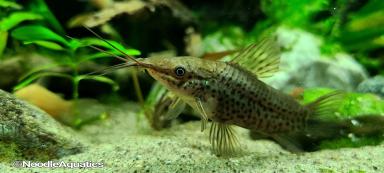
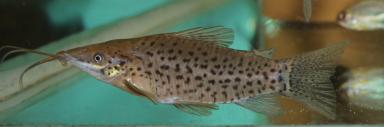
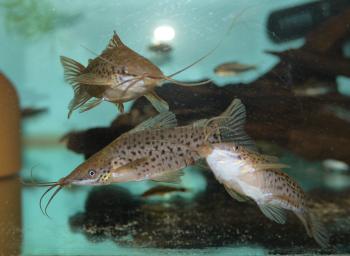
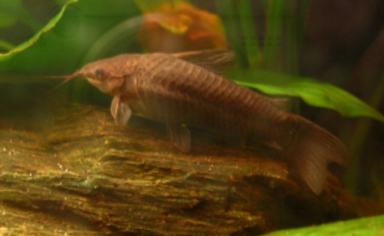 Female
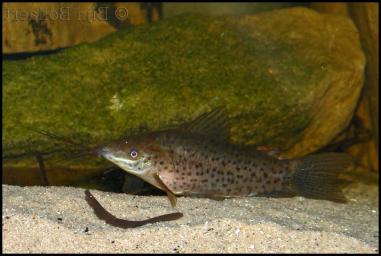
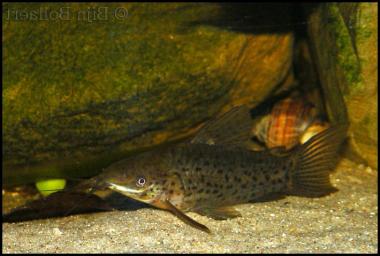
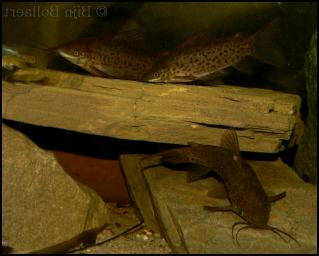
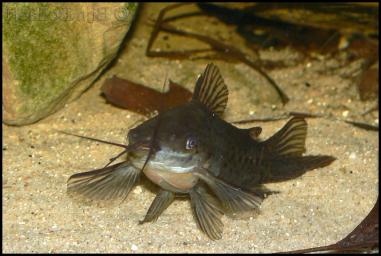
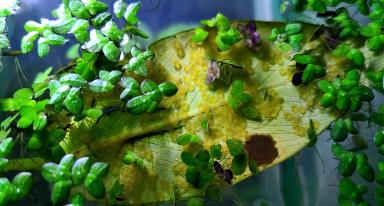 Eggs
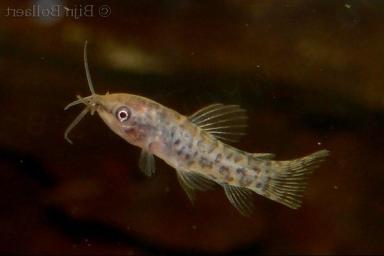
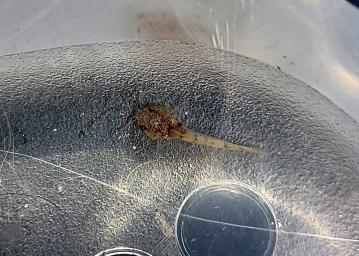 Two week old
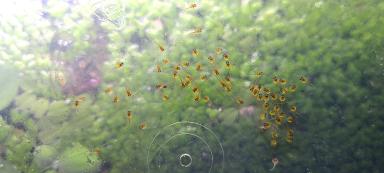 One day old
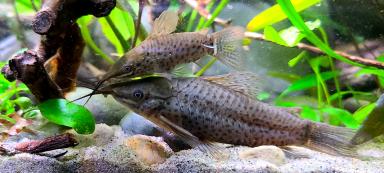 Juvenile with parent
| ⇓ Zebra Pleco (Hypancistrus zebra) Data Sheet | |
|---|---|
| Scientific Name | Hoplosternum punctatum Meek & Hildebrand, 1916 |
| Common Names | Spotted Hoplo Spættet Pansermalle (Danish, Denmark) |
| Type Locality | Río Marte Arnade, 6 mi. east of Panama City, Panama. |
| Synonym(s) | |
| Pronunciation | hop low STERN um |
| Etymology | Hoplosternum: From the Greek hoplon, meaning shield and sternum, meaning breast; in reference to the prominent coracoid bones on the breast. There are 2 other speciesHoplisoma punctatum Steindachneridion punctatum with this name. |
| ⇓ Species Information | |
| Size | 77mm or 3" SL. Find near, nearer or same sized spp. |
| Identification | Hoplosternum punctatum and Dianema longibarbis are sometimes confused. Hoplosternum punctatum has smaller eyes. In adults the difference in bodyshape and armour is easier to spot; the pectoral shields in Hoplosternum punctatum do not touch in the centre (females) or overlap (males), but in Dianema these are closely placed together. The simplest way to tell them apart is to look at the length of the dorsal fin spine. In Hoplosternum it is about half the length of the first soft ray. In Dianema the dorsal fin spine is about the same length as the first soft ray. |
| Sexing | In Dianema, Hoplosternum and Megalechis (but not in Callichthys), medial expansions of the coracoid bones are especially developed, covering most of the skin between the pectoral fins and sometimes overlapping in the midline in fully developed mature males (vs. not fully covering the abdominal skin and not overlapping in females). Mature males of Callichthys, Dianema, Hoplosternum, Lepthoplosternum, and Megalechis have a thick adipose body on the ventral surface of the pectoral fin. Mature females of Dianema, Hoplosternum and Megalechis have a small fold of skin on the external face of the leading pelvic-fin ray. |
| ⇓ Habitat Information | |
| Distribution | Central and South America: Pacific coastal drainages of Panama and in the Atrato River basin in Colombia. Colombia Caribbean Rivers, Atrato (click on these areas to find other species found there) Login to view the map. |
| IUCN Red List Category | Near Threatened , a distribution map is available on the IUCN species page. Last assessed 2019. |
| ⇓ Husbandry Information | |
| Breeding | Has been bred in the aquarium. |
| Breeding Reports | There is no breeding report. |
| ⇓ Further Information | |
| Reference | Field Museum of Natural History, Publications, Zoölogical Series v. 10 (no. 15), pp 264, Pls. 14-15. |
| Wishlists | There is no wish to keep this species. |
| Spotters | There is no record of this fish being seen. |
| ⇓ More Resources | |
| Forum BBCode | |
| Find CLOG | 10 mentions on the forum, starting 1st Mar 09 |
 | Look up H. punctatum on PlanetCatfish.com |
 | Look up H. punctatum on Fishbase |
 | Look up H. punctatum on Encyclopedia of Life |
 | Look up H. punctatum on Global Biodiversity Information Facility |
 | LFS label creator ARN ref:1.1.139.1048 |
| Last Update | Thu Jan 02, 2025 9:39 am (Species record created: Sat Jun 21, 2003 7:00 am) |
