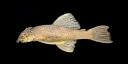
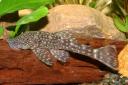
| ⇓ Summary of Ancistrus |
|---|
| New spp. / time |  | | | |  | | | | | | | | | | | 1750 | 1770 | 1790 | 1810 | 1830 | 1850 | 1870 | 1890 | 1910 | 1930 | 1950 | 1970 | 1990 | 2010 |
|
| Species | There are 187 "species" in our database. Ancistrus sp. (3) has the most images ( 74). |
| Breeding Reports | Breeding reports for this genus (143) |
| Pronunciation | an SISS truss |
| Etymology | The name Ancistrus is derived from the Greek word agkistron, meaning hook, in reference to the interopercular odontodes that are hooked. |
| Identification | Mature males and sometimes females have soft tentacles (bushy fleshy growths) on the snout - this is unique to the genus Ancistrus. |
| Feeding | Ancistrus should be fed mainly on vegetarian foods. Prepared foods include algae wafers and spirulina based sinking food. Vegetables such as courgette/zucchini, and (English) cucumber are an excellent addition to the diet, along with the odd, small amount of more meaty foods. |
| Compatibility | A good complement to most aquariums, they are not aggressive to other species. Males may fight over territory if kept in too small a tank. |
| Tankmates | Appropriate with most community fish that aren't overly big or aggressive. |
| Sexing | Males develop soft tentacles on the head and while sometimes females also do, it is never to the grand extent of those found on that of the conspecific male. |
| Size | Smallest 48 mm, largest 250 mm, average 109mm, most commonly 100mm. All SL. |
| Distribution |
Login to view the map. |