| ⇓ Summary of Amblyceps |
|---|
| New spp. / time |  | | |  | | | | | | | | | | | | 1750 | 1770 | 1790 | 1810 | 1830 | 1850 | 1870 | 1890 | 1910 | 1930 | 1950 | 1970 | 1990 | 2010 |
|
| Species | There are 21 "species" in our database. Amblyceps mangois has the most images ( 13). |
| Pronunciation | AHM bli seps |
| Etymology | From the Greek amblys, meaning blunt and kephale, meaning head; in reference to the blunt snout. |
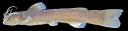
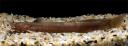
| Identification | The catfish genus Amblyceps is characteristic in having the epiphyseal commissure of the supraorbital sensory canals immediately anterior to, and not passing through the epiphyseal bar; the anterior cranial fontanelle narrowing abruptly along its posterior end offering epiphyseal commisure bony support from frontal; the fifth ceratobranchial expanding medially at its posterior tip; pinnatelike rays along anterior margin of the procurrent and medial caudal-fin rays; a transverse crest along entire posterior margin of roof of supraoccipital and pterotic; the lateroposterior process of horizontal lamina of urohyal short or vestigial,shorter than the horizontal lamina; the upper hypurals fused with compound centrum; the anterior nostril situated immediately anterior to the base of the nasal barbel; and both lips with double folds. It is also
characteristic in having a prominent cup-like skin flap above the base of the pectoral spine. |
| Feeding | Readily eats all manner of live and prepared foods. |
| Tankmates | Other associated fish collected belongs to genera Devario,Danio, Opsarius, Garra, Rasbora, Aborichthys, Schistura, Olyra and Batasio. |
| Breeding | No member of this genus has been bred in the aquarium. |
| Size | Smallest 40 mm, largest 128 mm, average 75mm, most commonly 56mm. All SL. |
| Distribution |
Login to view the map. |